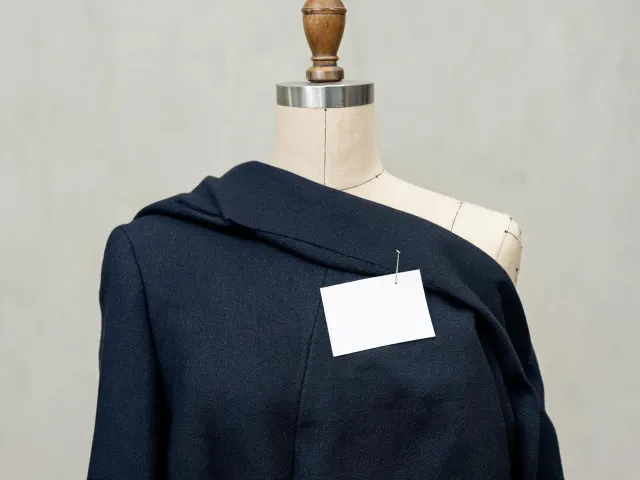
Business Suiting
Balance drape, recovery, surface and season against the garment's internal structure.

IND-FTX-A · application verticals
Use categories help frame weight, construction, drape and season. They do not turn fabric into finished clothing, and they do not override the current fields of a named article.
Each card is a decision context. Images show intended use, while selection still starts from the physical fabric and its article record.
Balance drape, recovery, surface and season against the garment's internal structure.
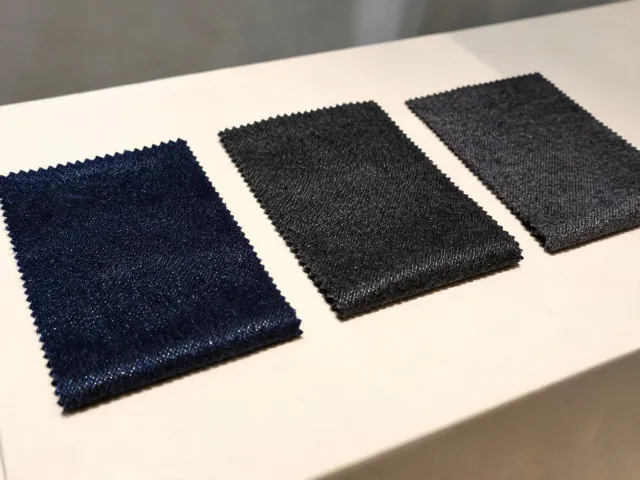
Review lustre, handle, pattern scale and colour under the intended lighting context.
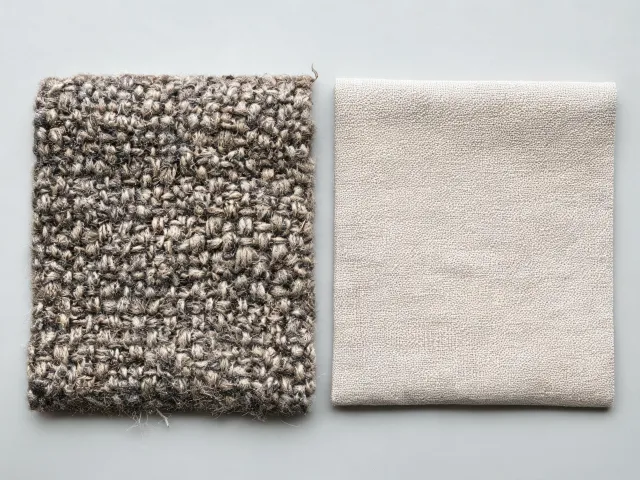
Consider texture, openness, stability and compatibility with the planned jacket construction.
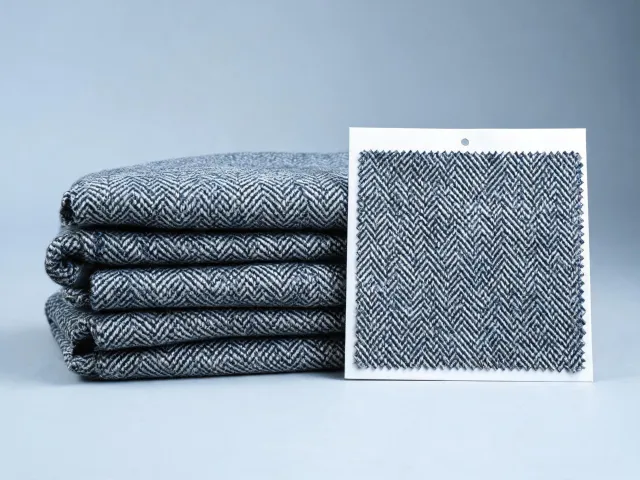
Weight, surface and structure need article-specific confirmation before sampling.
| Decision | One direction | Counterpoint to verify |
|---|---|---|
| Fine versus more robust wool | A finer wool may offer a smoother, more fluid expression. | A fuller fibre and construction may better match dry handle, resilience or repeated wear; do not infer durability from fineness alone. |
| Open versus compact construction | Tropical or hopsack structures can support airflow and a dry surface. | Opacity, snag response, tailoring stability and the actual fabric weight still need review on the selected article. |
| Pure wool versus a natural-fibre blend | Pure wool offers its own elastic, hygroscopic and tailoring behavior. | Silk, linen, mohair, cashmere or other fibres change lustre, texture, handle, care and price; percentages must come from the article record. |
| Light versus substantial weight | A lighter cloth may suit warmer conditions or softer construction. | Drape, opacity, crease response and garment architecture can require more substance; grams alone do not decide suitability. |
The ranges below are questions, not specifications. Confirm the exact article rather than treating a collection label as a fixed recipe.
Tell us the garment architecture, season, desired surface and known article references. The response can then separate catalog facts from items that require a swatch or current confirmation.