Wool selection
Merino, Saxon Merino and 21 Micron references describe different material intentions. Micron, origin and fibre character must stay with the applicable official source or article.
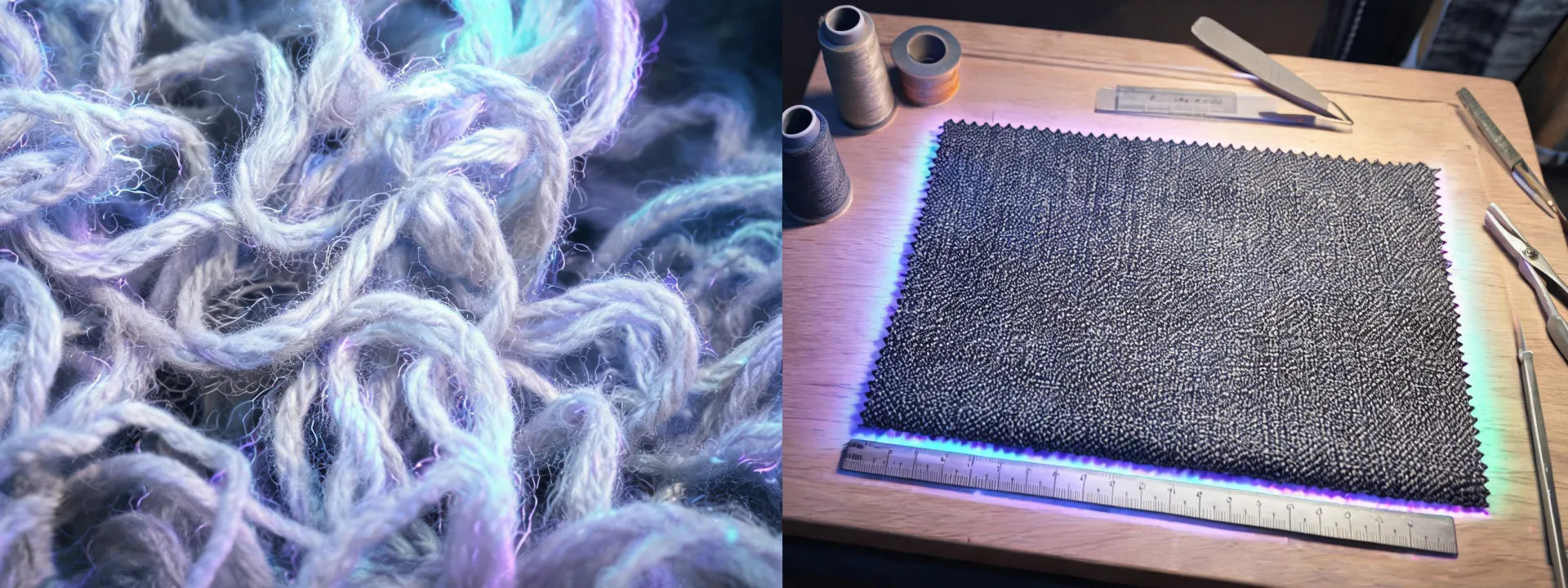
INN-FTX-A · bounded material development
Innovation is useful when the fibre, yarn, weave construction, finish and intended garment remain visible in the evidence. This page maps development questions without claiming that every concept, finish or environmental attribute applies to every fabric article.
Each horizontal card marks a distinct development route. A route becomes relevant only when the current article, composition, process and supporting document establish its scope.
Merino, Saxon Merino and 21 Micron references describe different material intentions. Micron, origin and fibre character must stay with the applicable official source or article.
Wool, silk, linen, mohair and cashmere can shift lustre, texture, breathability and hand. Percentage composition and care behavior are not interchangeable.
Tropical, hopsack and multi-ply constructions can target dry handle or airflow. Weight, opacity, recovery and tailoring stability still require a physical article review.
A finish or membrane must be described with its exact article, test method and end-use condition. “Water resistant,” “breathable” or “stretch” cannot become brand-wide guarantees.
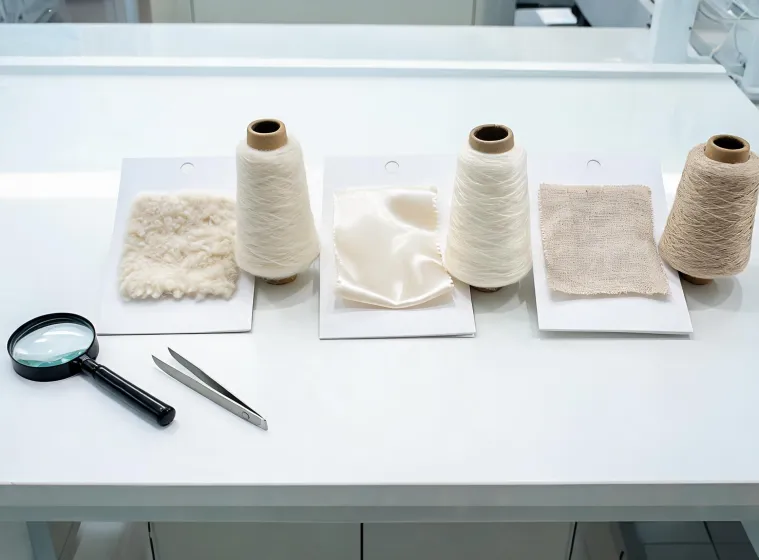
01 · Define
Begin with season, garment construction, desired handle, drape, surface and care context. If a buyer asks for recycled content or a low-impact process, define the requested claim, source boundary and document before selecting a material route.
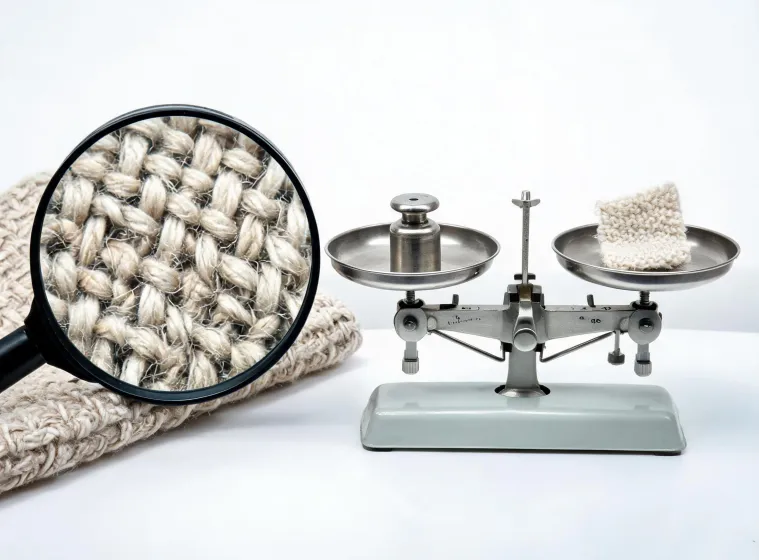
02 · Construct
Warp and weft, yarn count, twist, ply and finishing interact. One appealing label cannot predict drape, air permeability, dimensional stability or colour behavior. Those outcomes need article-specific evidence and, where relevant, an identified method.
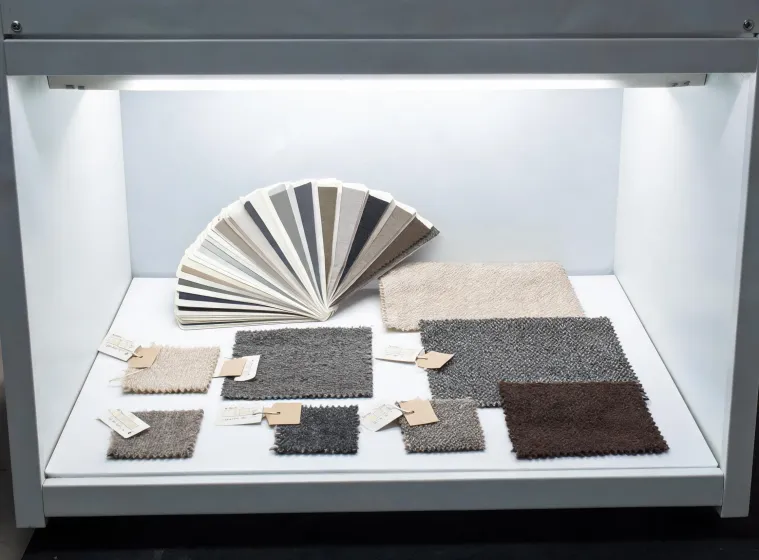
03 · Verify
Review fibre content, grams per square metre, usable width, colourfastness, dimensional stability and the relevant appearance criteria on the applicable specimen. A result for one colour, weave or finish does not automatically cover another dye lot or construction.
No active certification is asserted by this generated configuration. The blocks below show the documentation questions a buyer can ask for a named article.
Identify the article, garment use, desired attribute and document needed. That keeps innovation language connected to something a textile technologist can check.
Build an Evidence Brief